
TMS for Treatment-Resistant Depression Near Portland
Treatment-Resistant Depression Care in Vancouver, WA
When medication hasn’t worked, there is still a path forward.
When Depression Won’t Respond to Medication
You did what you were supposed to do. You saw a doctor, started an antidepressant, waited weeks, switched, waited again—and you are still depressed. If that story sounds familiar, you may have treatment-resistant depression: commonly defined as depression that has not adequately responded to at least two antidepressant trials of adequate dose and duration.
Treatment resistance is not a character flaw, and it does not mean nothing will work. It means the next treatment should be different in kind, not just another pill in the same family. At Diamond Edge TMS in Vancouver, WA, Dr. Jerald Block specializes in exactly this situation, with FDA-cleared NeuroStar TMS therapy at the center of the toolkit.
Why TMS Is Built for This Problem
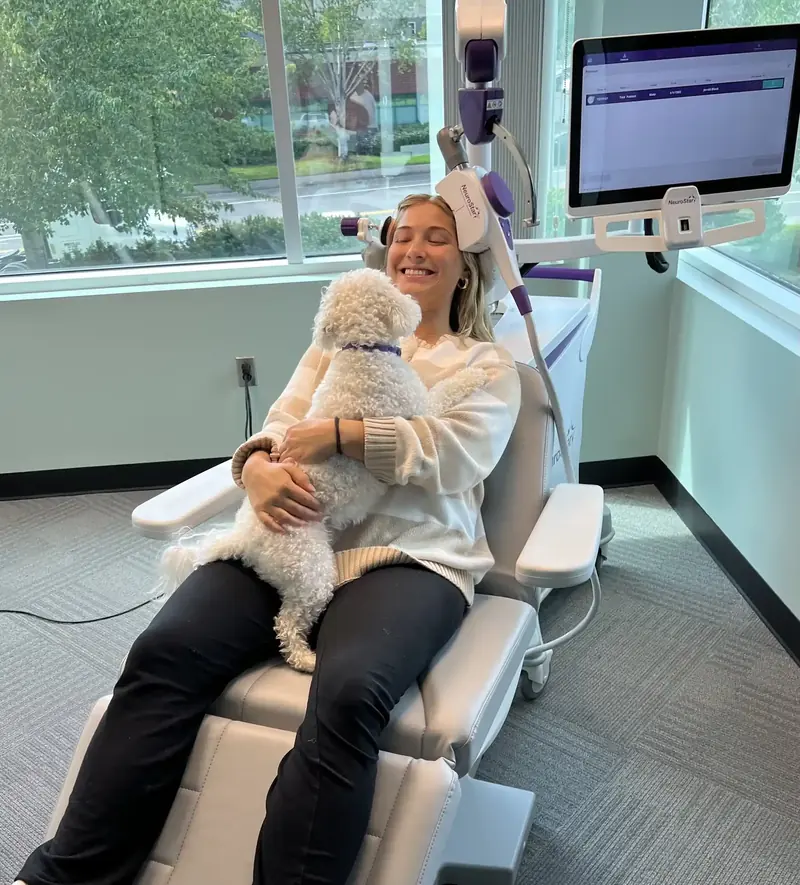
Antidepressants work through your bloodstream, affecting the whole body. Transcranial magnetic stimulation takes a different route entirely: magnetic pulses stimulate the specific brain regions involved in mood regulation, with no systemic medication, no sedation, and no downtime. That difference matters most for people whose depression has already outlasted medication.
The evidence here is specifically about people like you—patients whose depression had already resisted treatment:
- In a head-to-head trial published August 7, 2024 in The American Journal of Psychiatry (Dalhuisen et al.), patients with inadequate response to at least two prior treatments received either TMS or optimized medication, with both groups also receiving psychotherapy. TMS was two-and-a-half times more likely to produce a 50% or greater reduction in symptoms, and five-and-a-half times more likely to lead to full remission of the depression.
- In a study by Roth et al. in Psychiatry Research (October 2023), roughly 4 out of 5 patients had a 50% or greater reduction in symptoms, and around half were no longer depressed.
Results vary from person to person, and improvement usually takes several weeks—Dr. Block suggests completing at least 20 sessions before judging whether TMS is working for you.
Standard and Accelerated Options
Our standard course is daily sessions over roughly 7 weeks, 36 visits in total, each about 20 minutes. For select patients who need rapid care—pilots, active military, first responders—we also offer an accelerated 5-day plan similar to the SAINT protocol (Cole et al., American Journal of Psychiatry, 2020): 10 brief treatments a day for 5 consecutive days. Learn more about both on our TMS therapy page.
Insurance Coverage for Treatment-Resistant Depression
Because TMS is an established treatment for depression that has not responded to medication, most major insurers cover it with prior authorization. Generally, if a person has tried and failed at least three psychotropic medications, insurance will approve the treatment. TRICARE has covered TMS for treatment-resistant depression since 2018—see our TRICARE coverage page—and you can review the full list of insurances we accept. Our team handles the authorization paperwork so you can focus on getting better.
Note that the accelerated 5-day plan is less established in the scientific literature than the 36-session course, so many insurers will not cover it.
Care Built Around You, Not Just a Machine
Dr. Jerald Block brings 25+ years of psychiatric experience, board certification by the American Board of Psychiatry and Neurology, and advanced training in psychoanalysis and TMS. Treatment-resistant depression rarely yields to a single tool, so TMS at Diamond Edge is delivered inside a complete psychiatric practice: psychotherapy and thoughtful medication management can continue alongside your TMS course, coordinated by one physician who knows your whole story.
Keep Reading
Treatment-Resistant Depression FAQ
Treatment-resistant depression commonly refers to depression that has not adequately responded to at least two antidepressant trials of adequate dose and duration. It does not mean you are out of options—it means the next options should look different from the last ones. TMS therapy was developed for exactly this situation.
In a study published August 7, 2024 in The American Journal of Psychiatry by Dalhuisen et al., patients who had not responded adequately to at least two prior treatments received either TMS or optimized medication, with both groups also receiving psychotherapy. TMS was two-and-a-half times more likely to produce a reduction of 50% or more in symptoms, and five-and-a-half times more likely to lead to full remission. In another study by Roth et al. in Psychiatry Research (October 2023), roughly 4 out of 5 patients had a 50% or greater reduction in symptoms and around half were no longer depressed. Results vary, and improvement usually takes several weeks.
Most major insurers, including TRICARE, cover TMS for treatment-resistant depression with prior authorization. Generally, if a person has tried and failed at least three psychotropic medications, insurance will approve the treatment. Our team handles the authorization paperwork and will help you verify your benefits before starting.
Yes. Alongside the standard protocol of 36 sessions over roughly 7 weeks, we offer an accelerated 5-day treatment plan—10 brief sessions per day for 5 consecutive days, similar to the SAINT protocol studied by Cole et al. (American Journal of Psychiatry, 2020). It is less established in the scientific literature than the standard course, so many insurers do not cover it, but it can suit people who need rapid, medication-free care.
Visit a Board-Certified Psychiatrist Near You